
For Educators:
The MIASA (Multi-Informant Assessment System For Adolescents)
The MIASA is a mental health assessment tool designed to provide clinicians with a complete understanding of adolescent functioning.
Our goal is to support your students by gathering comprehensive information from multiple sources—teachers, parents, and the students themselves. This multi-perspective approach helps mental health professionals make informed decisions and provide targeted support.
Your perspective is invaluable. As educators, you observe students in academic and social settings that parents and clinicians don't see. Your insights about classroom behavior, peer interactions, and academic functioning provide a unique and essential perspective that helps create a complete picture of each student's mental health.
We know you're managing a full classroom with countless demands. We respect your time, and that's why we've designed the teacher questionnaire to take 5 minutes or less.
Thank you for your meaningful input. For more details about the assessment, see below.


CLASSROOM PERSPECTIVE
Teacher Questionnaire
Completion time: 5 minutes
36 questions covering areas where teachers have unique insight:
Classroom behavior and attention
Peer relationships and social functioning
Academic engagement and performance
Emotional regulation in school settings
Any behavioral concerns observed during the school day

Here are sample items from these areas:
Classroom Behavior: In the past month, they have been… Fidgety.
Self-Perception: In the past month, they have been… Confident in their abilities.
Social Functioning: In the past month, they have been… Avoiding interaction with their peers.
Academic Engagement: In the past month, they have been… Uninterested in this class.
STUDENT PERSPECTIVE
Youth Questionnaire
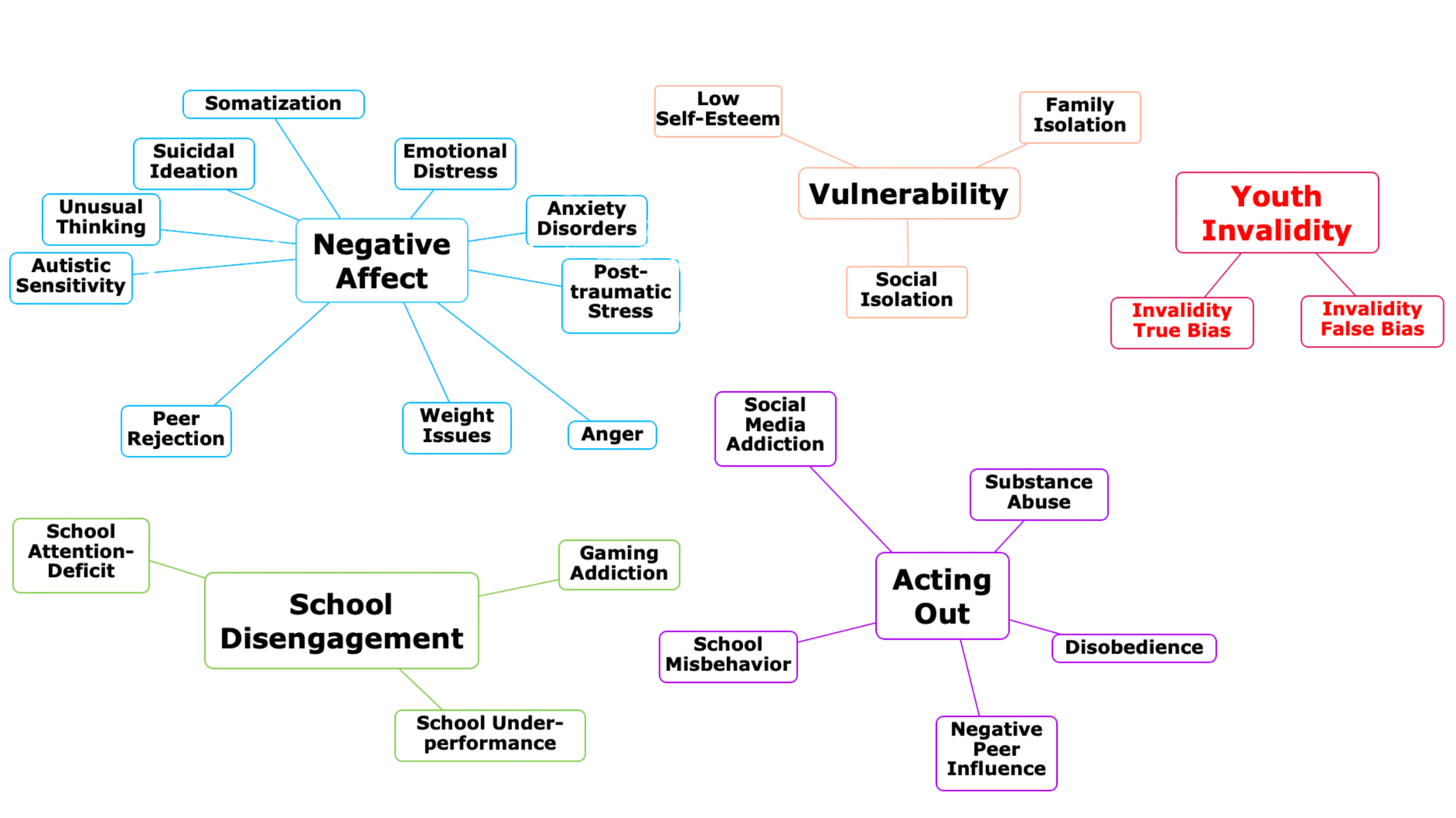
The youth questionnaire includes 137 questions about the adolescent's thoughts, feelings, and experiences across four key areas:
Emotional Well-Being: Assesses factors that may contribute to emotional distress, such as anxiety disorders, body image concerns, peer rejection, and more.
Academic Engagement: Examines school engagement and performance by assessing areas such as gaming addiction, attention deficits, and academic functioning.
Behavioral Control: Evaluates areas of behavioral concern such as aggression, rule-breaking, or negative peer influences.
Resiliency: Identifies potential risk factors such as low self-esteem, social exclusion, and family isolation.
HOUSEHOLD PERSPECTIVE

Parent Questionnaire
Parents complete 124 questions covering the same core areas as the youth version, in addition to sensitive topics such as:
Antisocial behaviors
Gender-related issues
Stressful family circumstances
Sexual acting out
Trauma history (e.g., physical or sexual abuse)

Your Privacy Matters
We understand you may have concerns about data privacy. Rest assured, all personal information is stored securely, and we follow strict privacy protocols to protect your data.
Still Have Questions About the Assessment?
Contact your student’s psychologist or counselor for more information or to discuss any concerns.